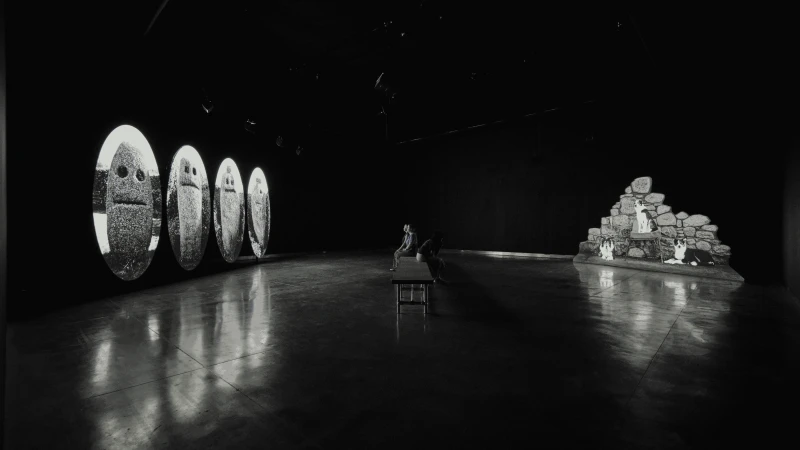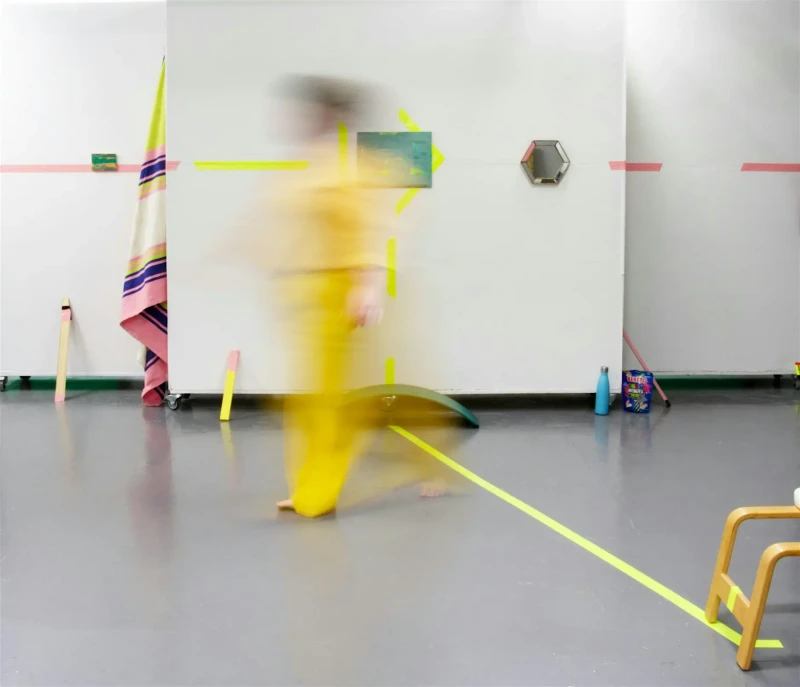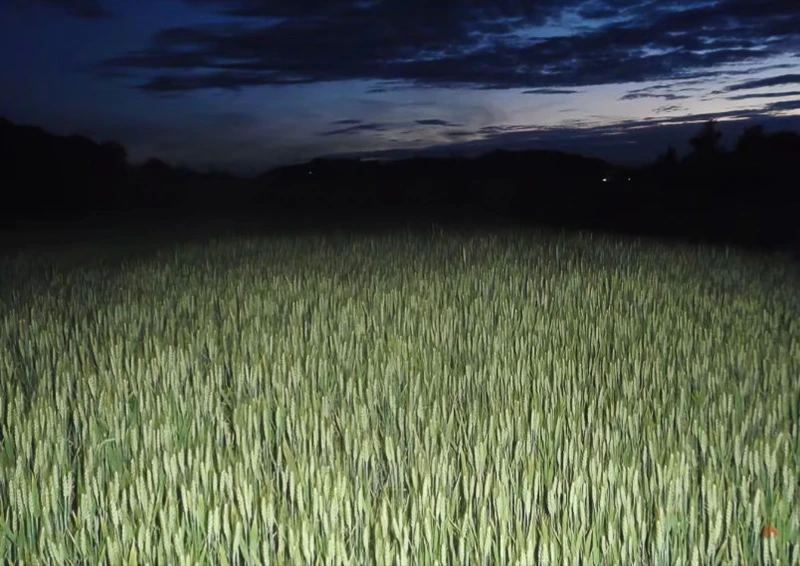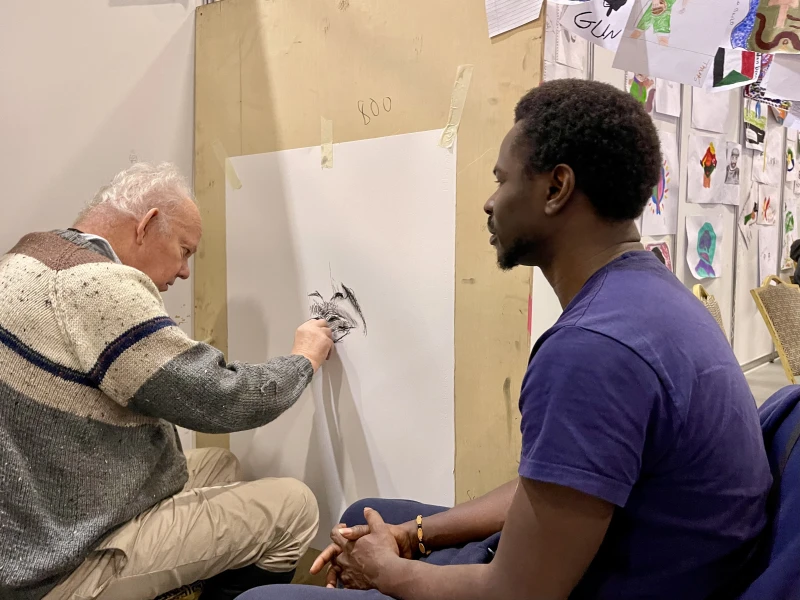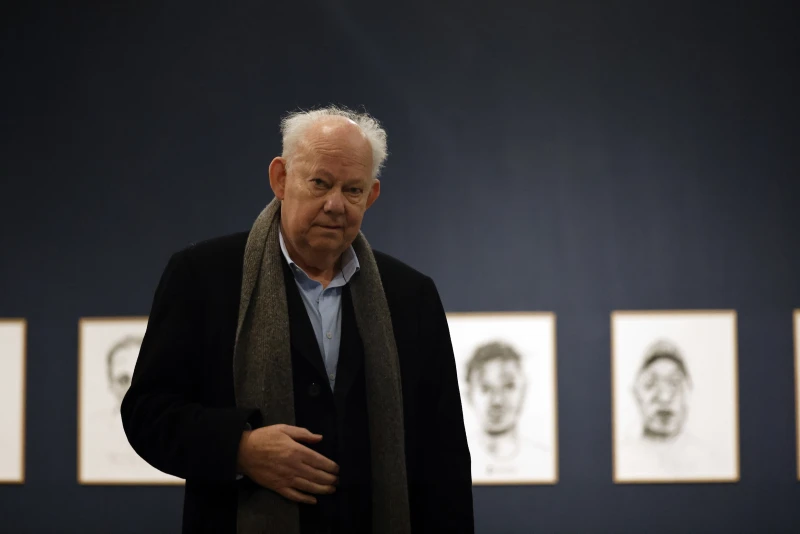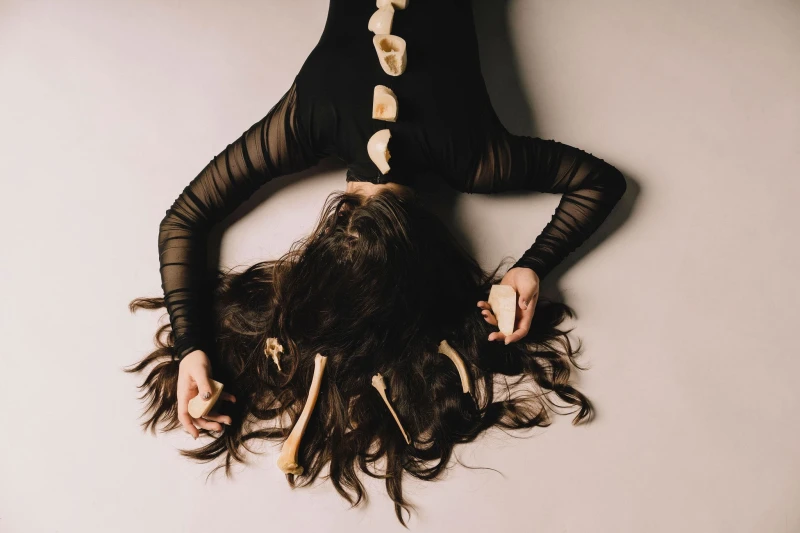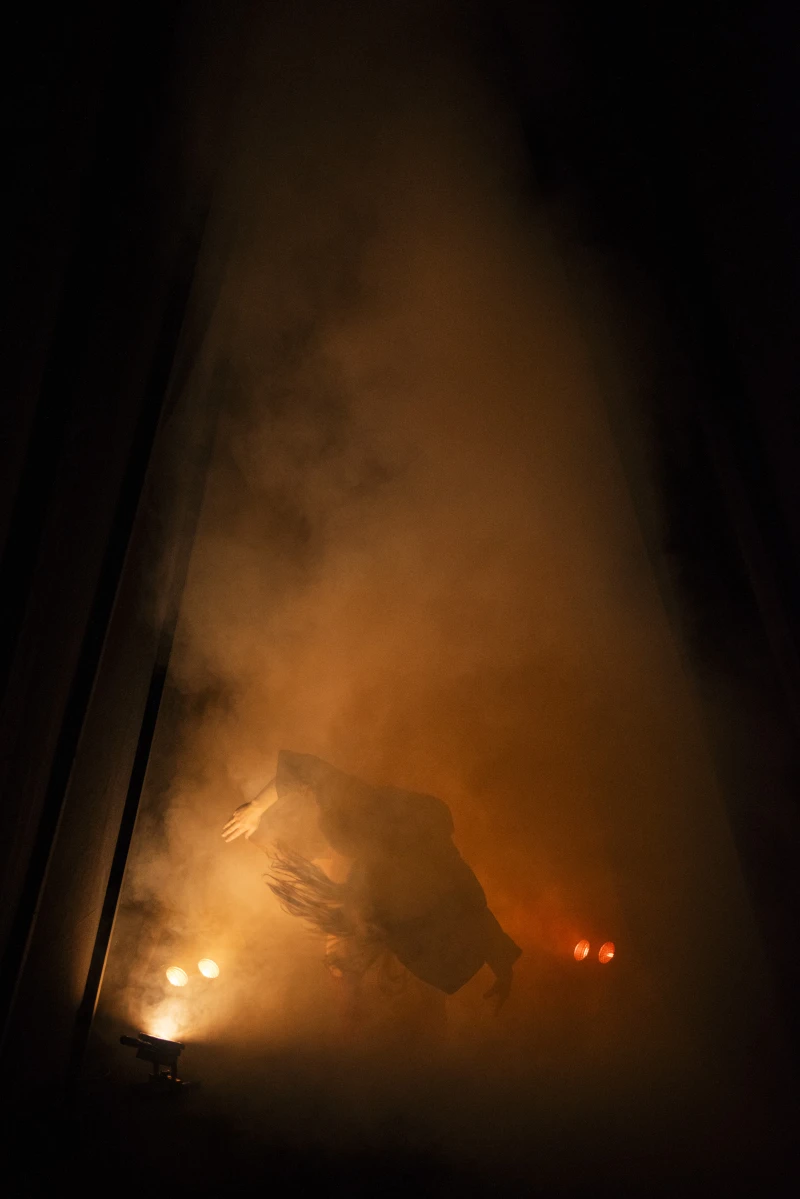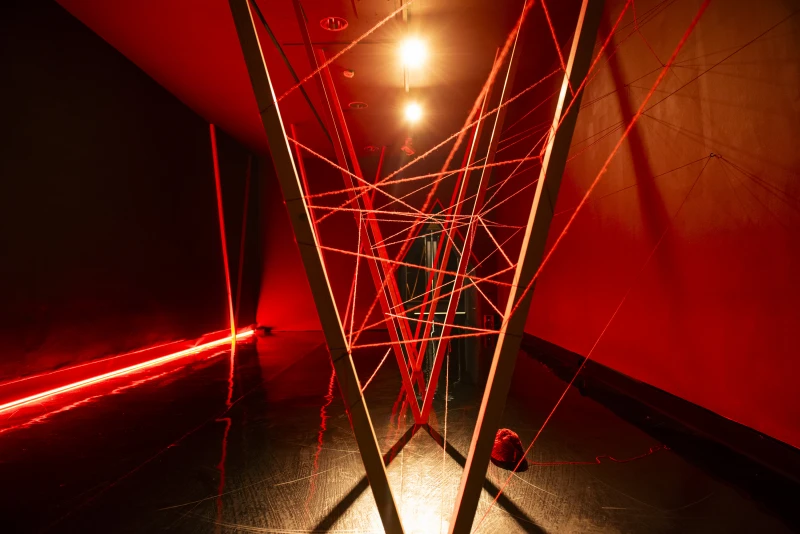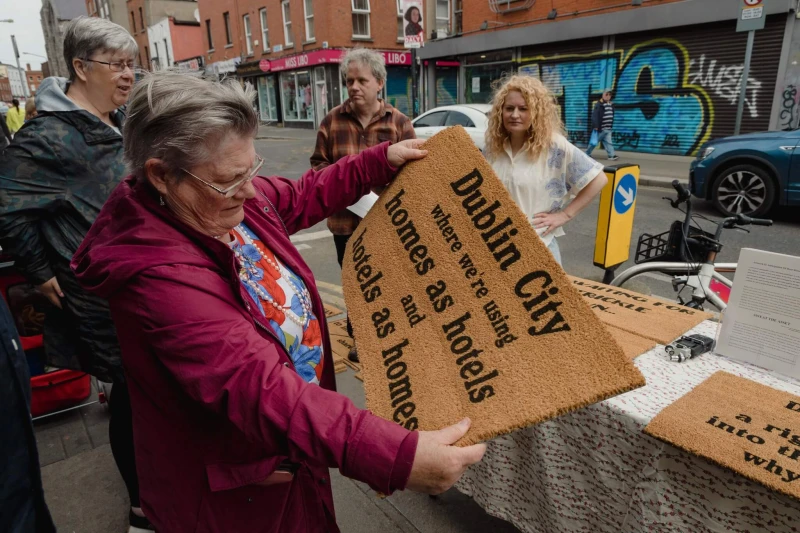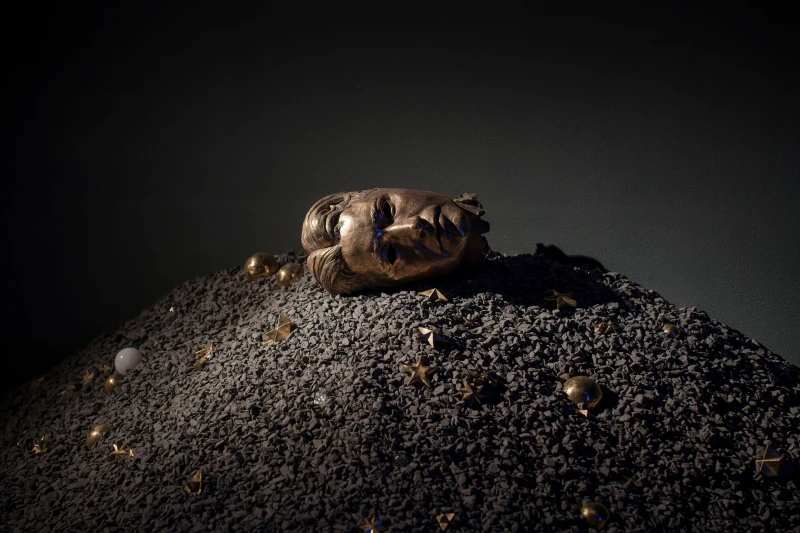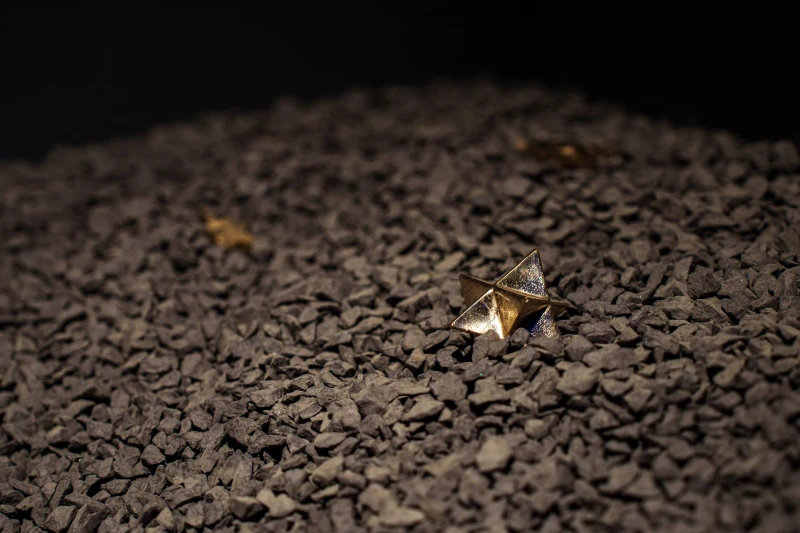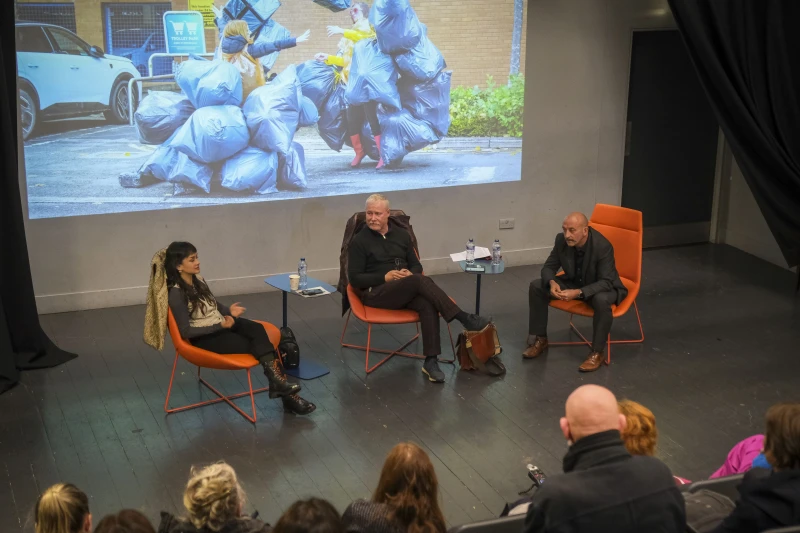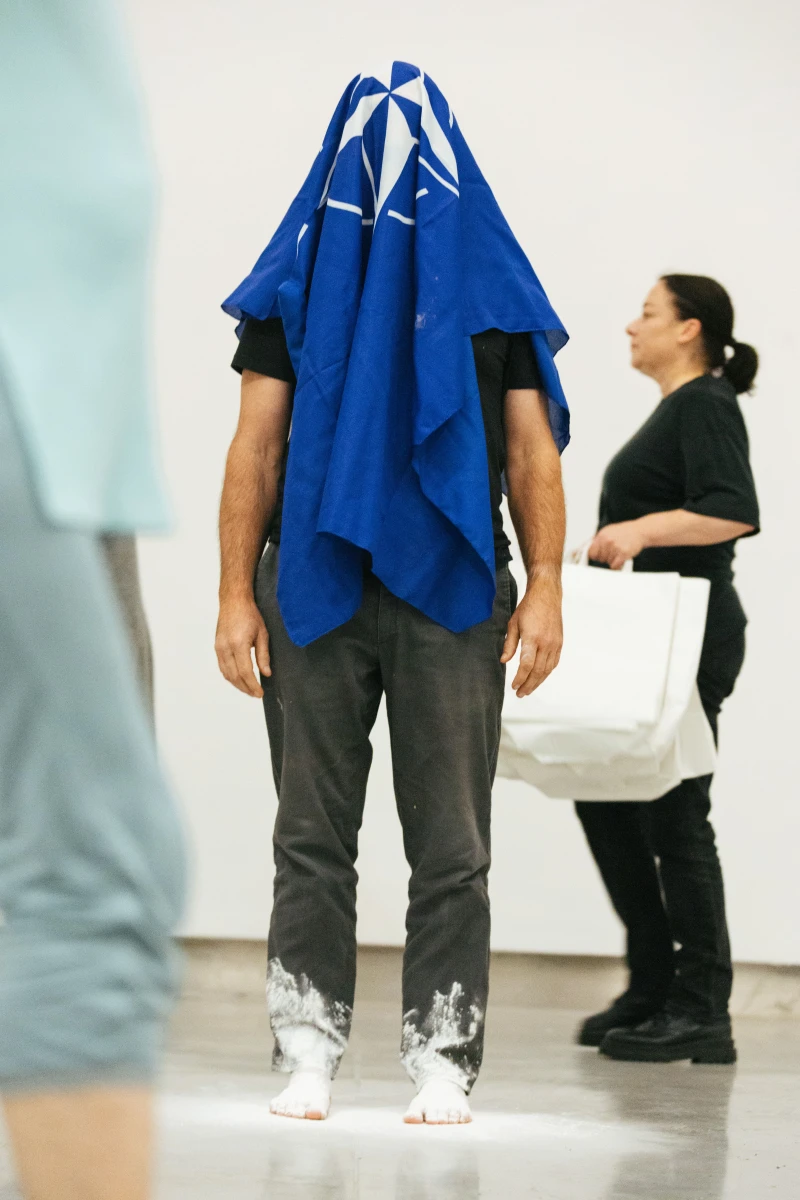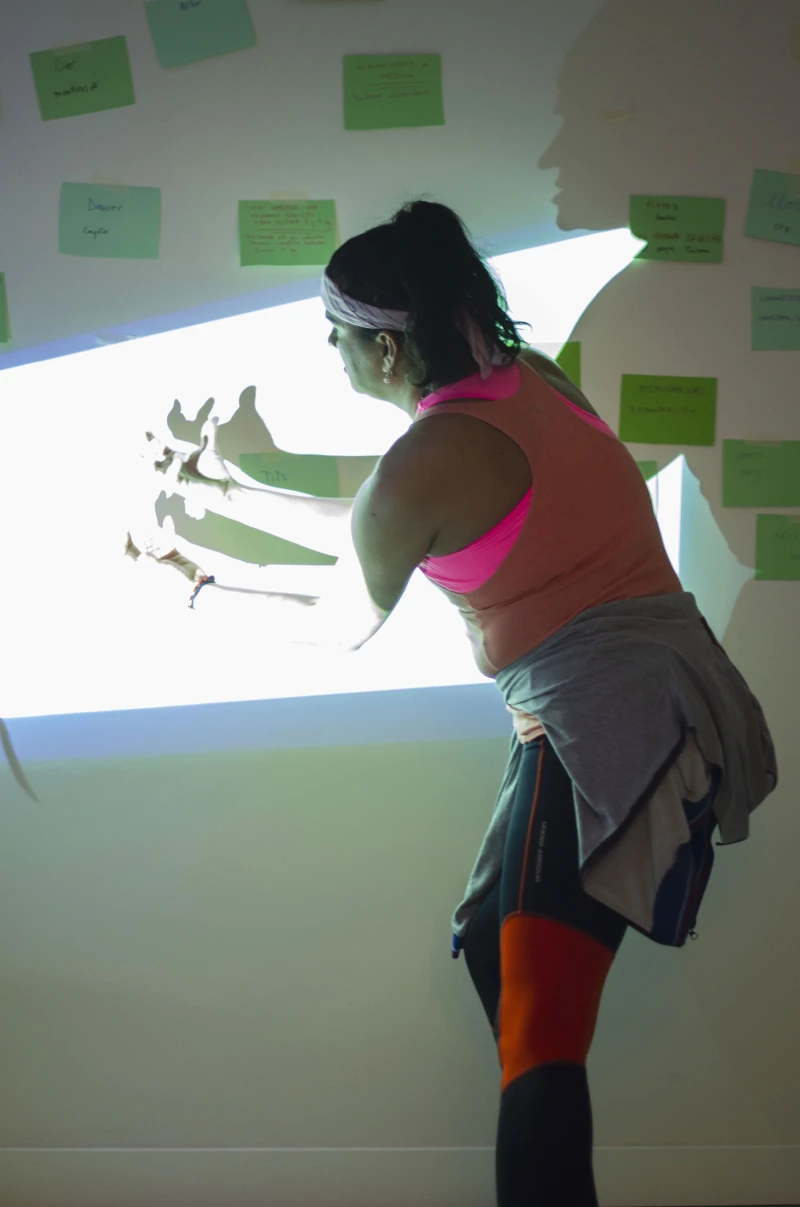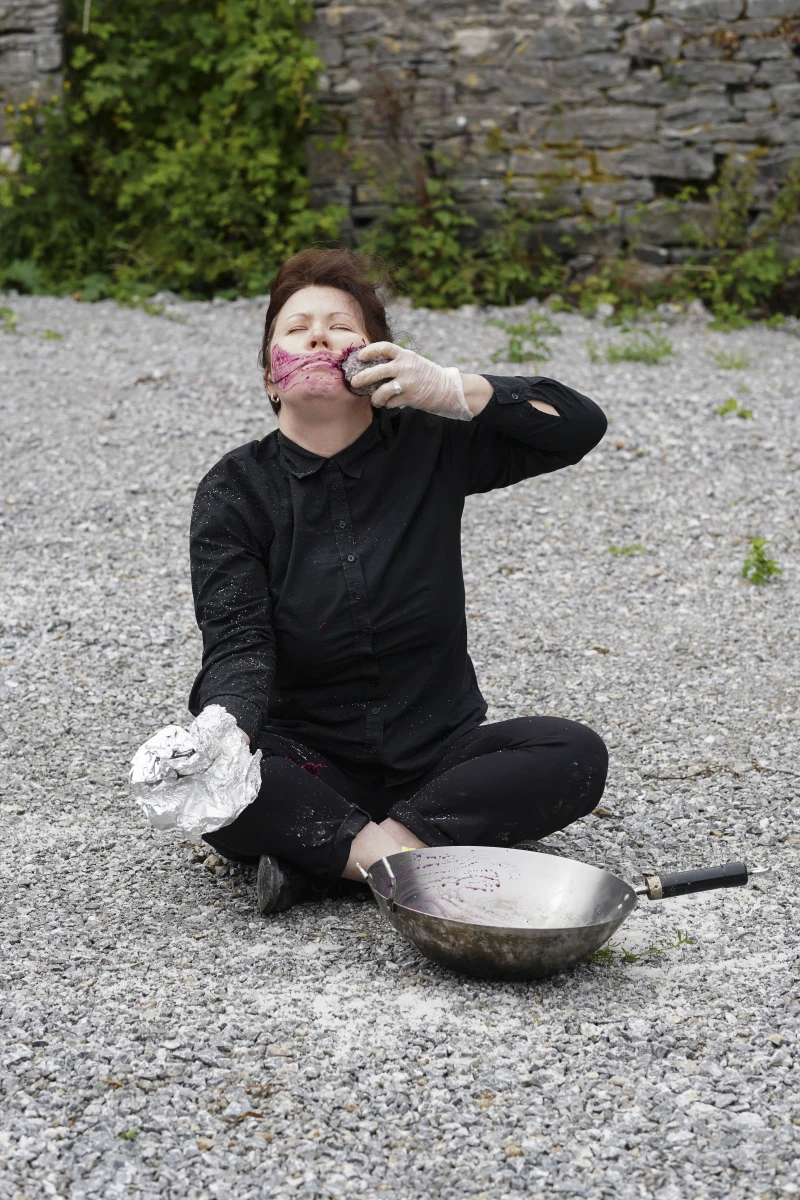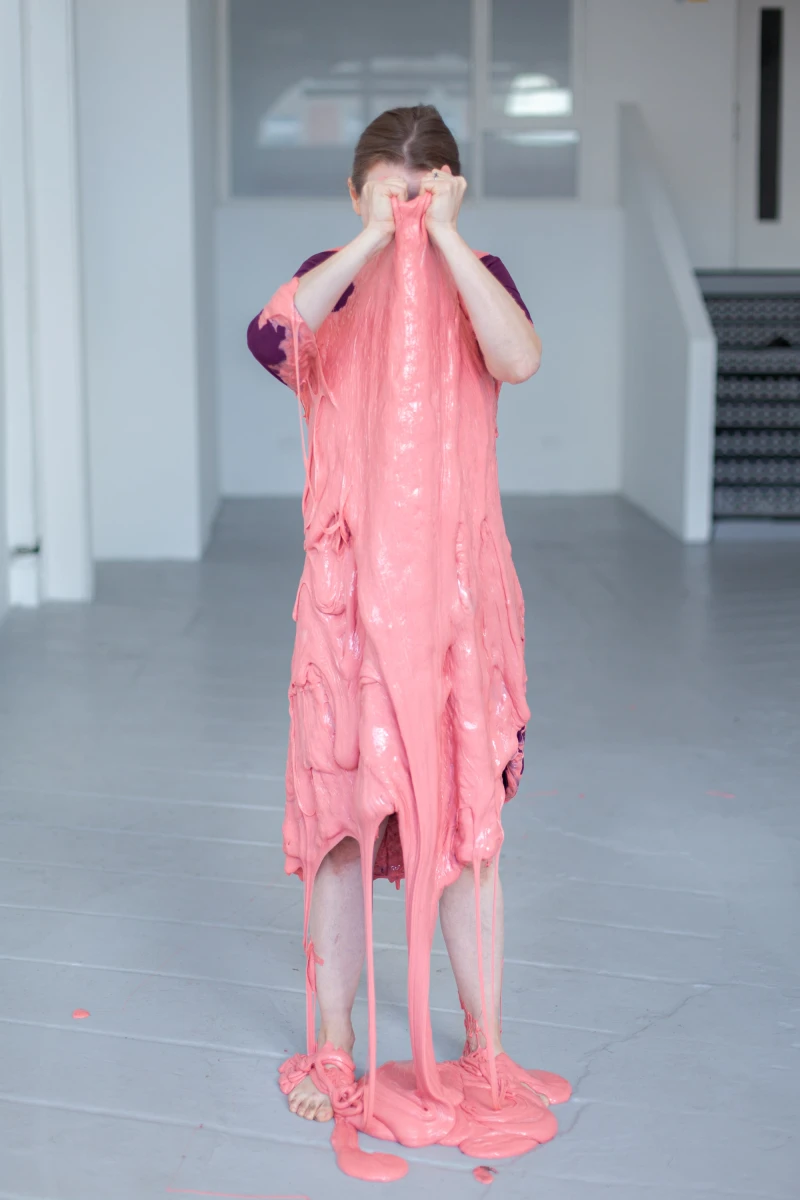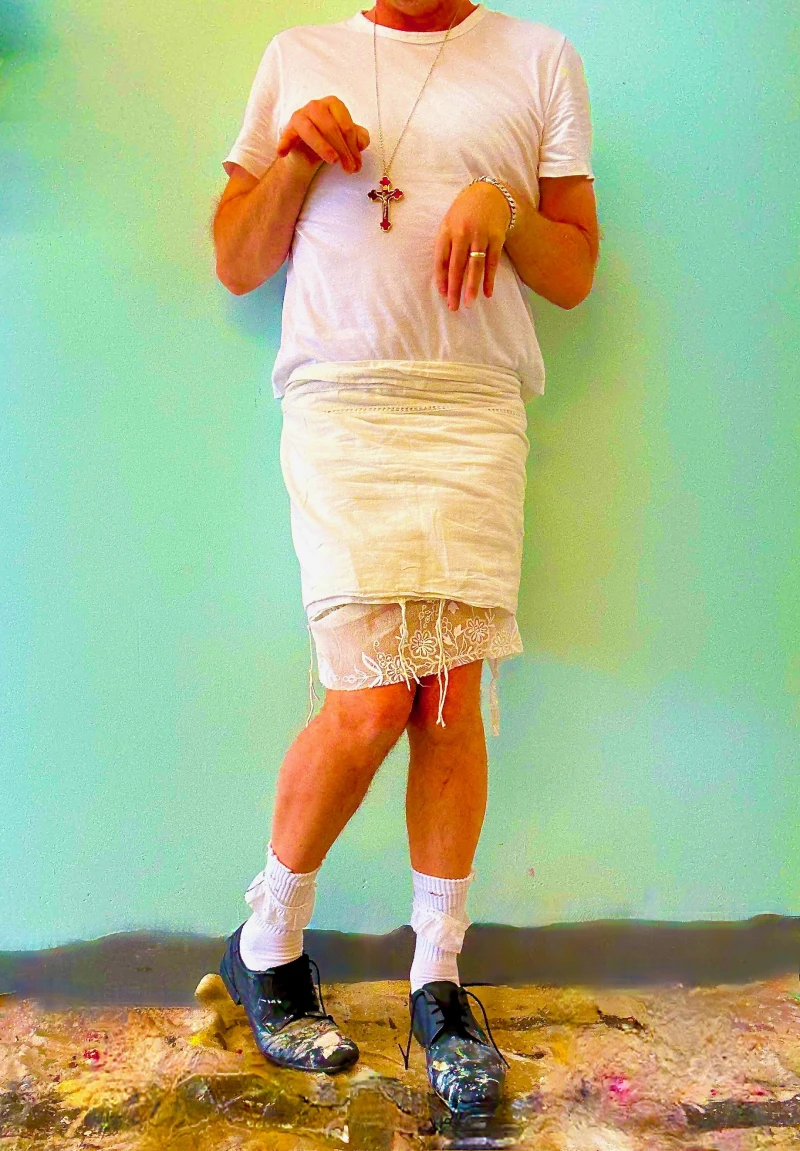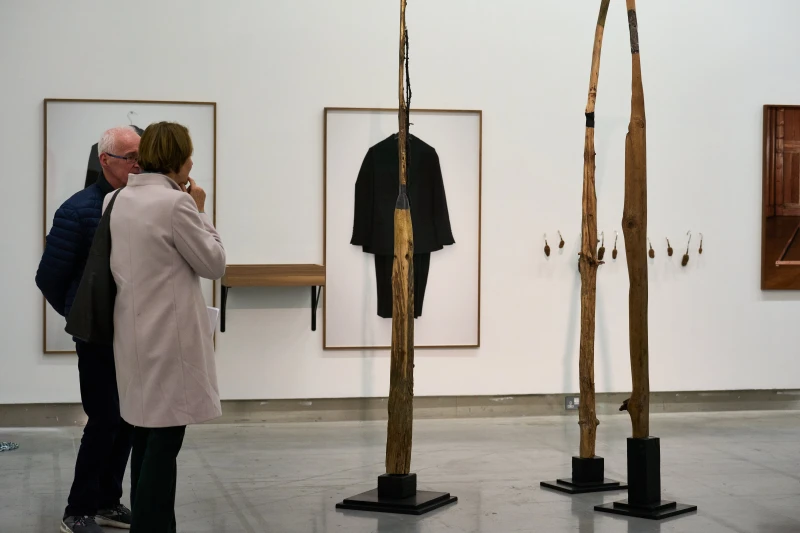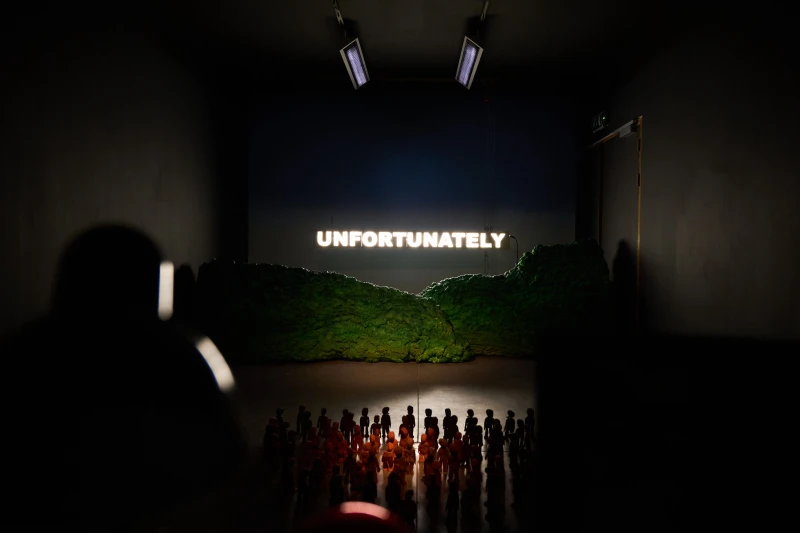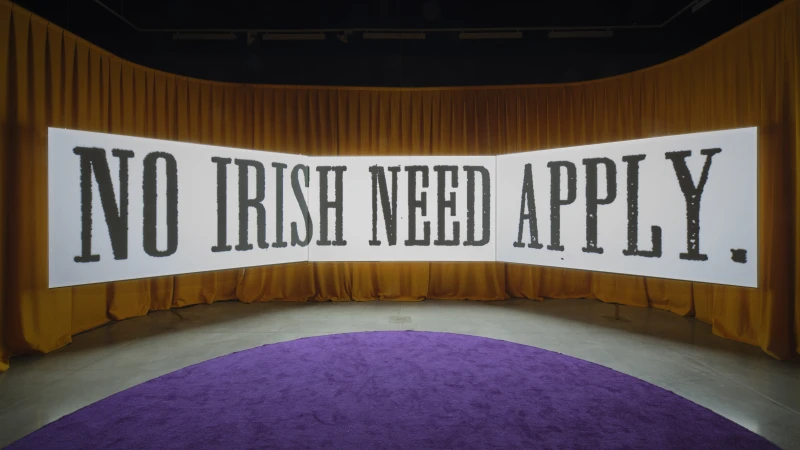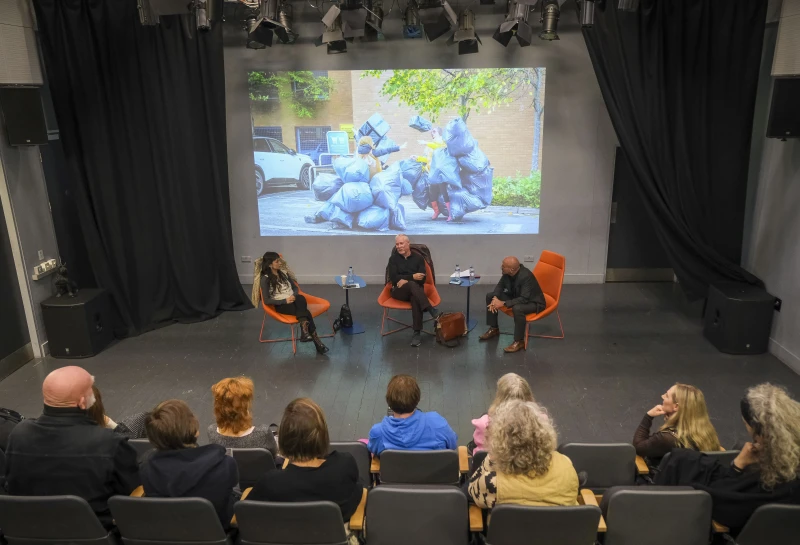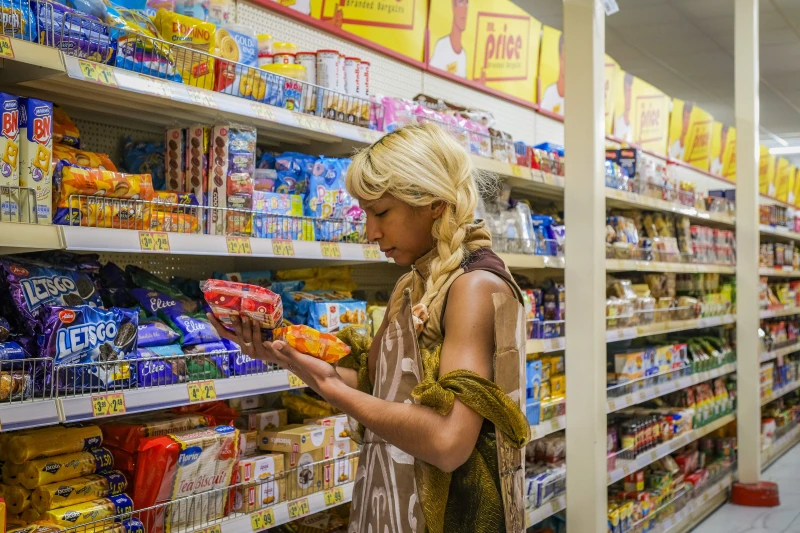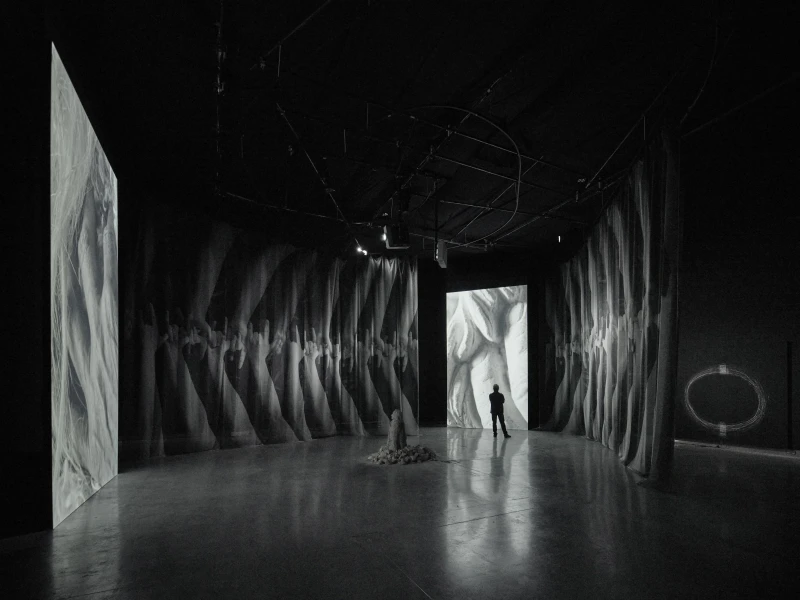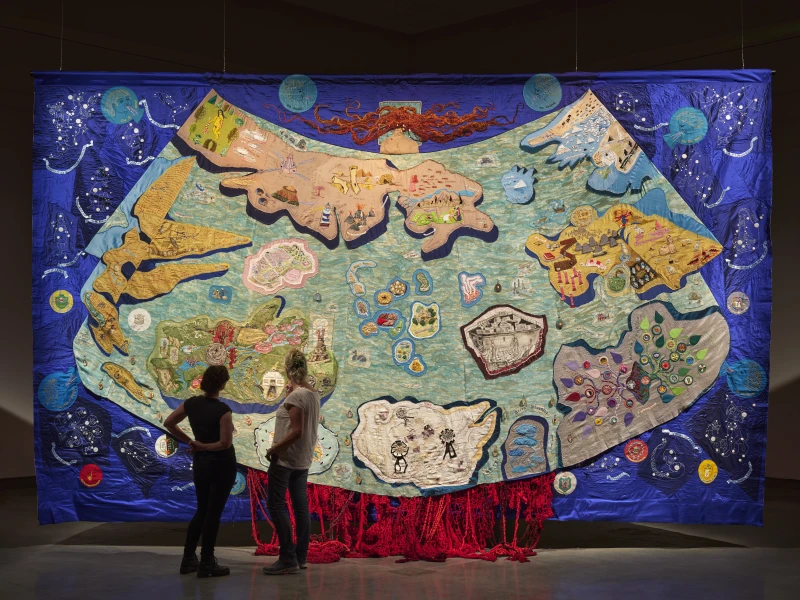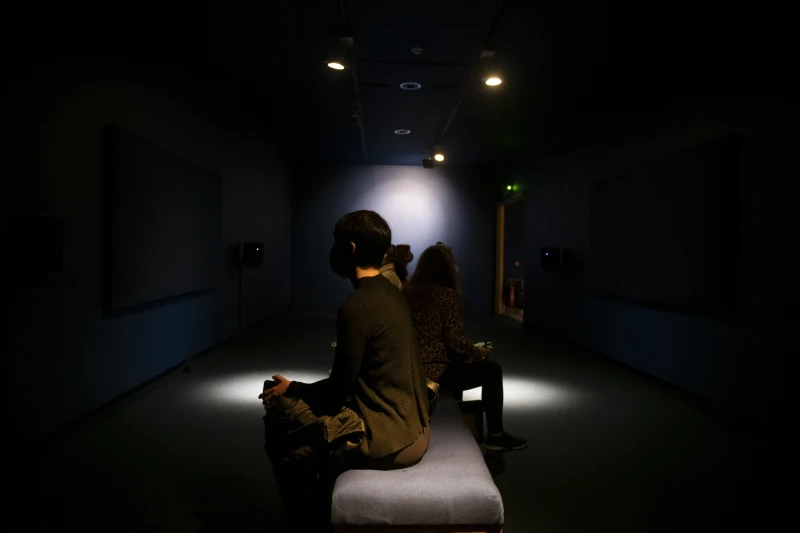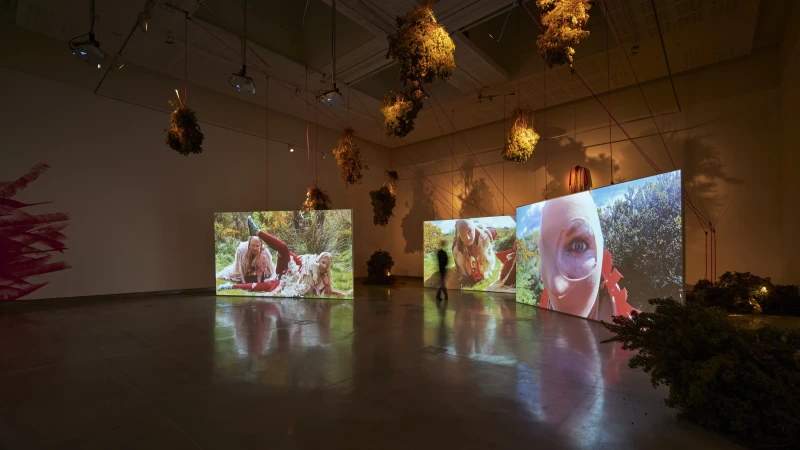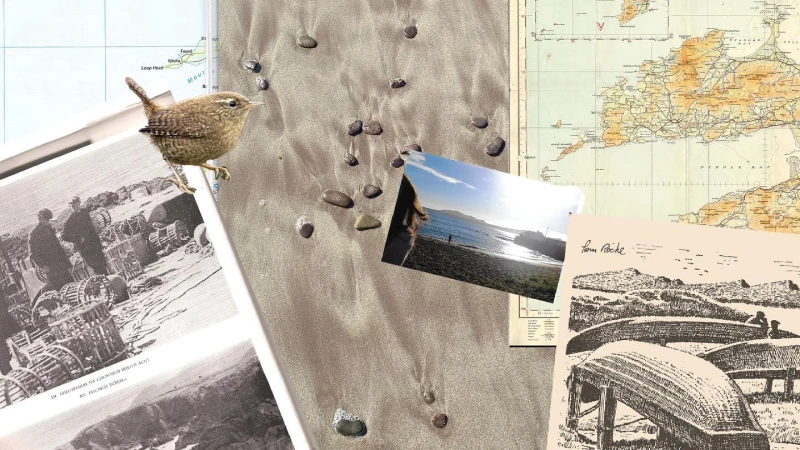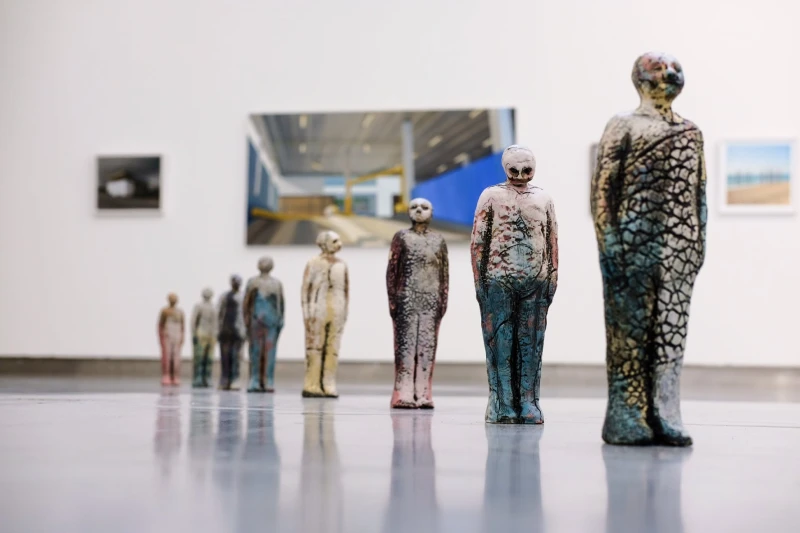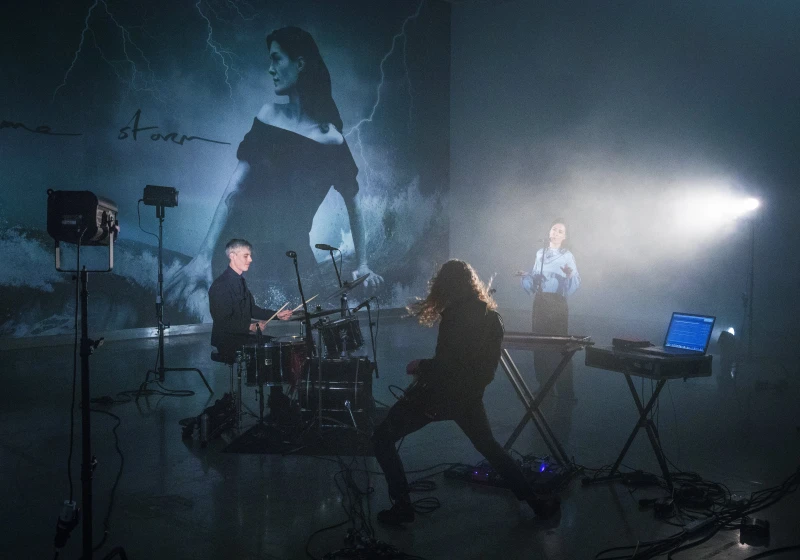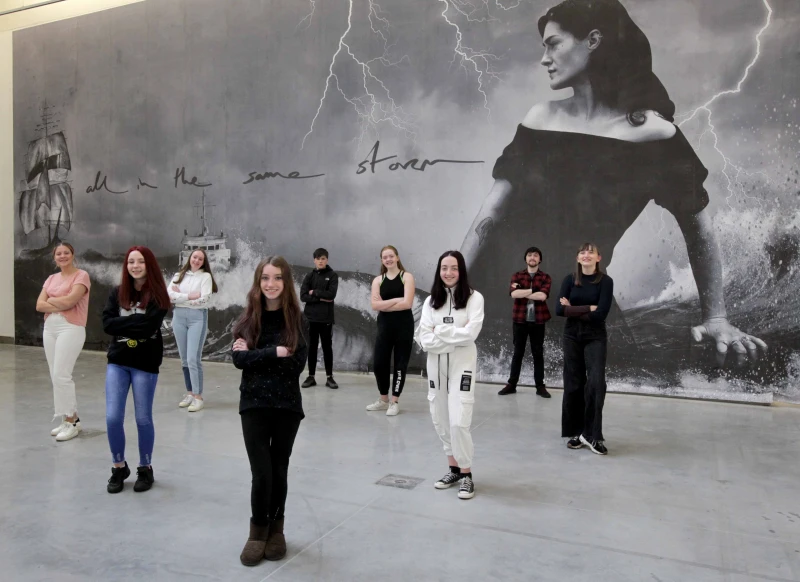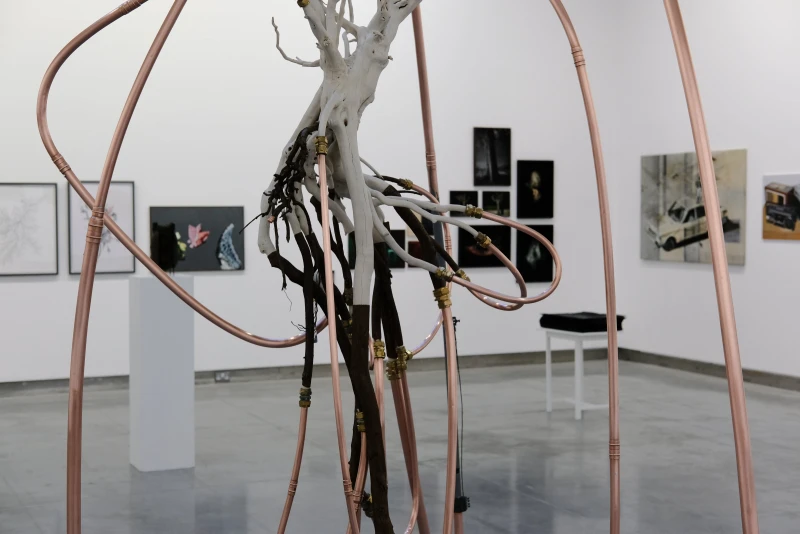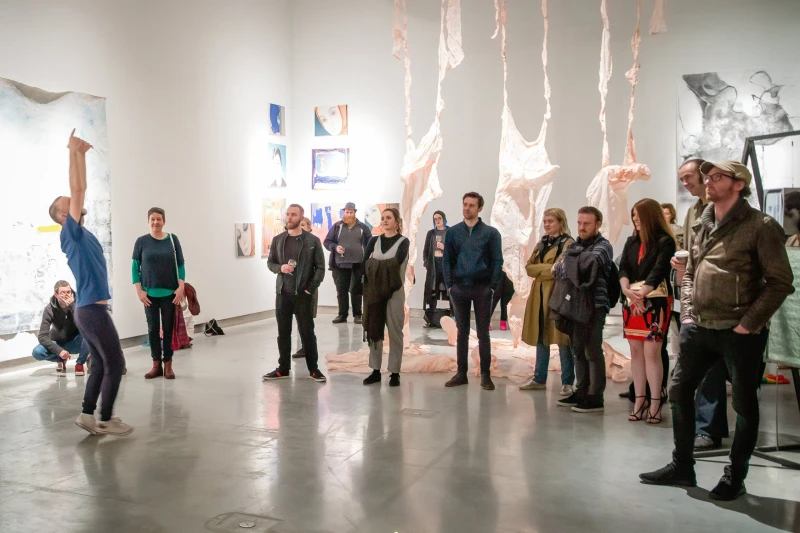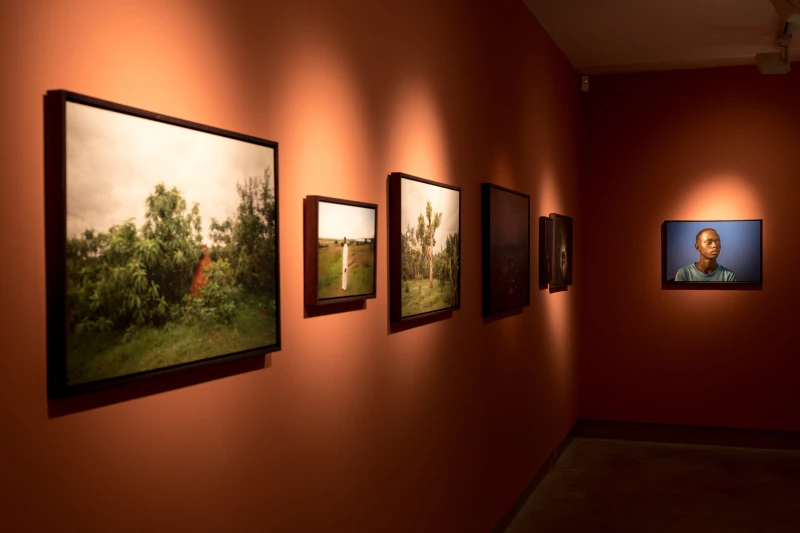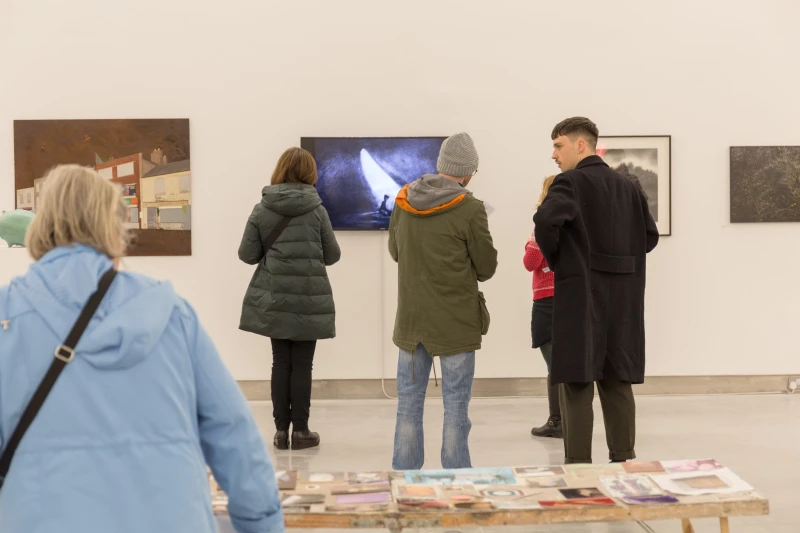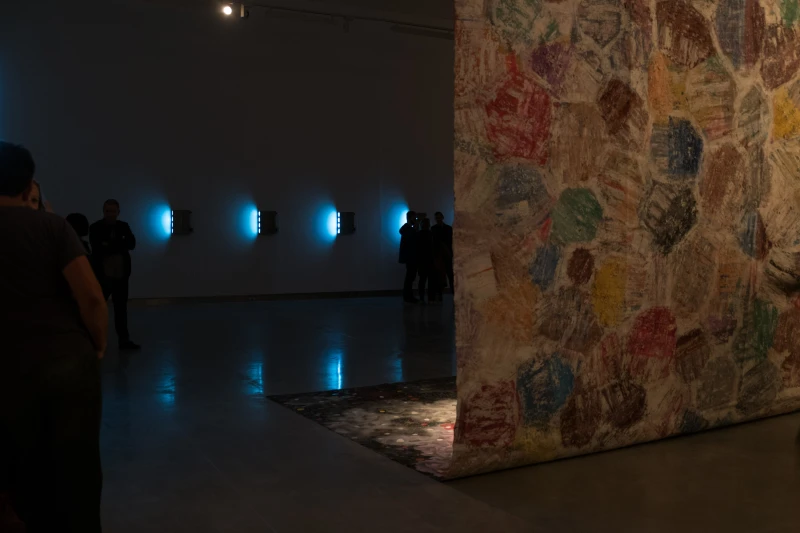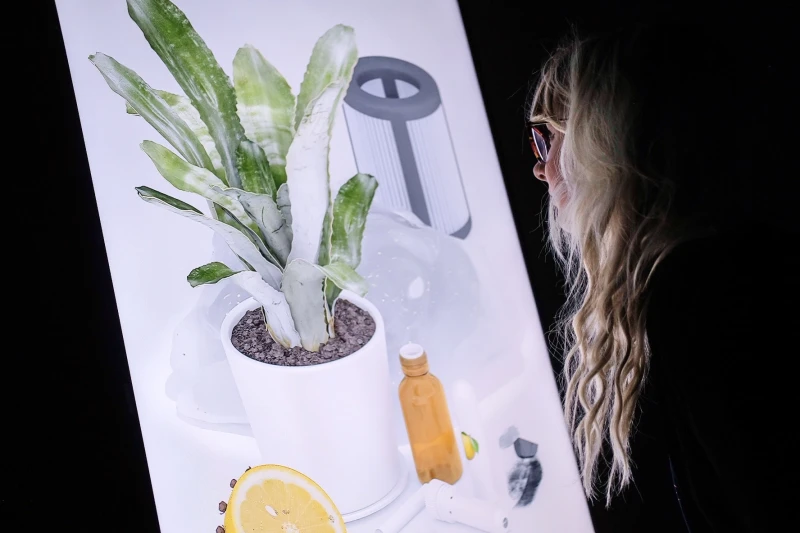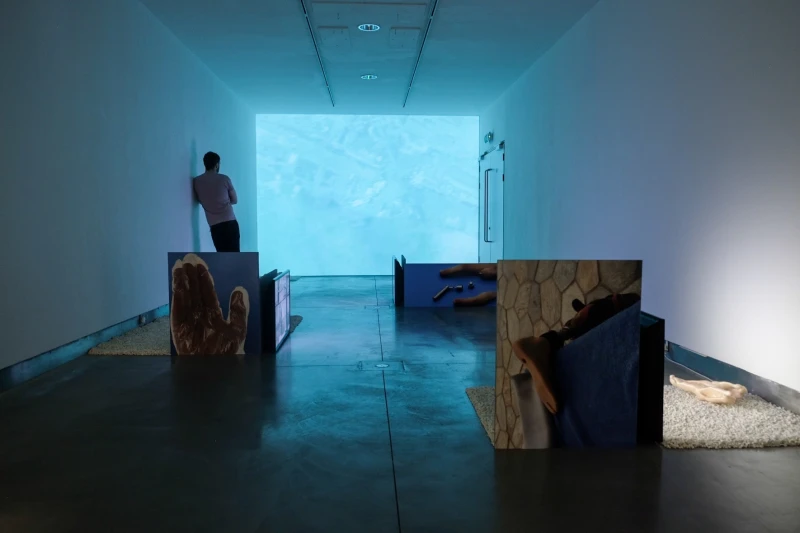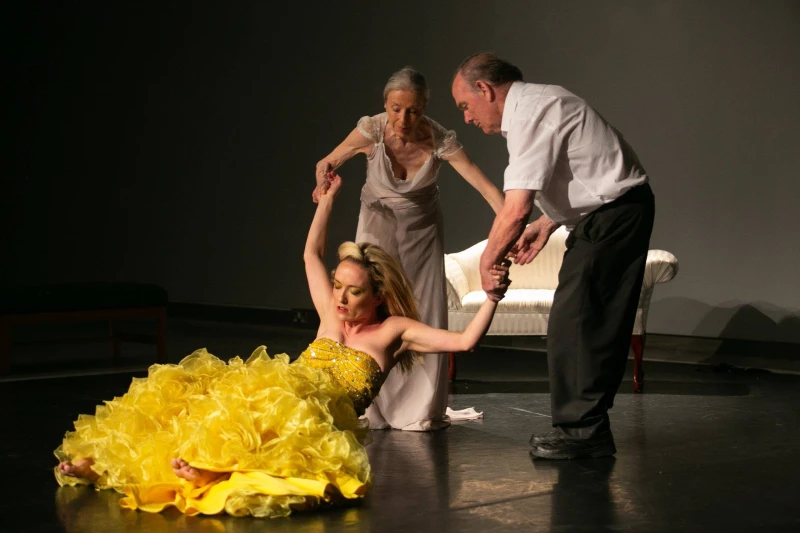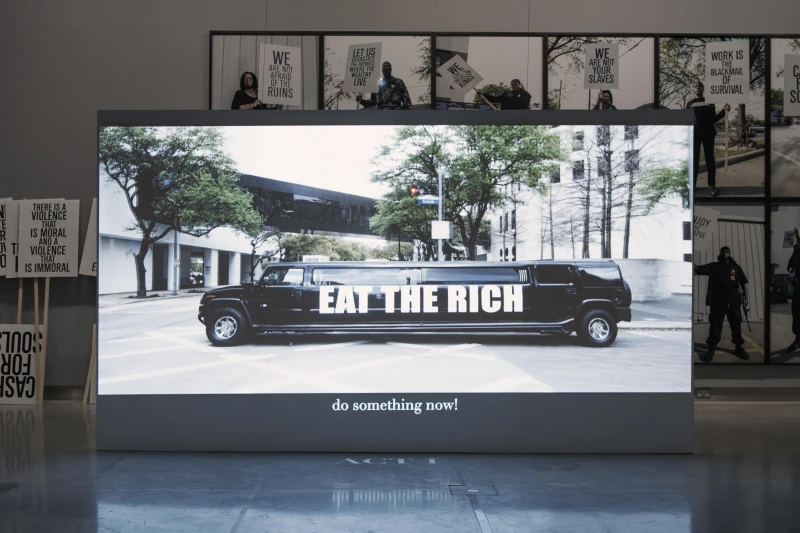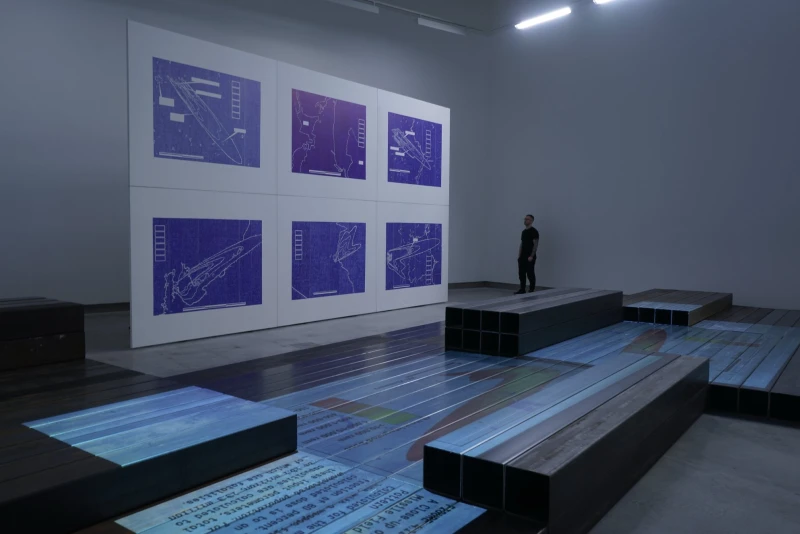
Join us at Rua Red where Ingrid Lyons and Orla Barry discuss Barry’s art practice, her vocation as a farmer and where these two worlds merge and blend. With reference to anecdotes from Barry's current exhibition—and new publication, The Collie, The Cheviot & The Crouched Skeleton, we consider the local and universal, the personal and political. Citing influences and formative moments on her creative path thus far, Barry shares her thoughts on core themes within her work including barefoot anthropology, embodied research, field research, ecology, immersion, the physical form of language, knowledge passed down and oral transmission in rural farming communities. In conversation, they discuss this in relation to the art world; cultural and agricultural dynamics as well as transformations in meaning and value of material and ideas according to context.
This event takes place on the final day of Orla Barry's exhibition at Rua Red, The Collie, The Cheviot & The Crouched Skeleton. A publication to accompany her exhibition will be available for purchase.
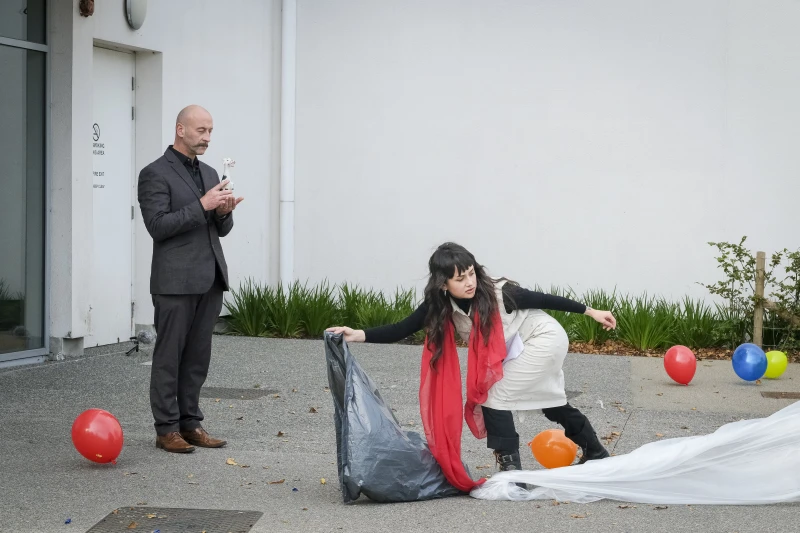
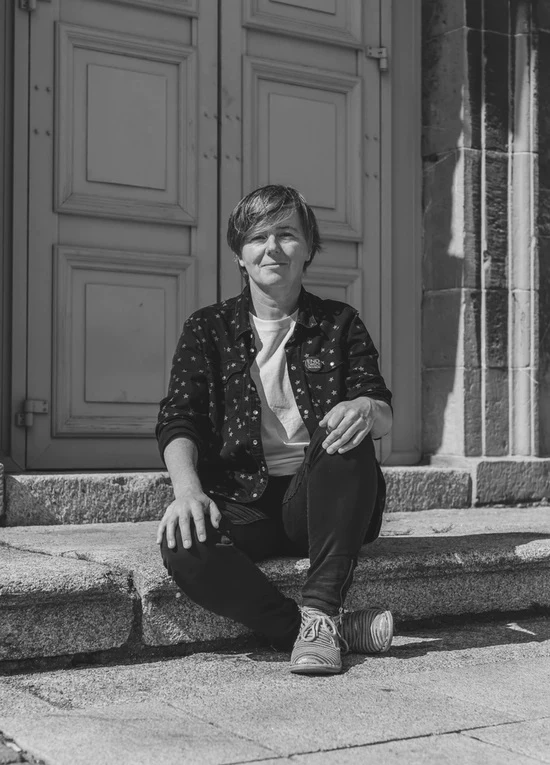
Ingrid Lyons is a writer, artist and performer based in Ireland. Merging fictional writing, musical sequencing, art writing, object gathering and public performance, Lyons’ practice investigates how art, language and material can co-exist within singularly or collaboratively produced texts, objects and environments. Recent research projects and works include, Live Archive; six-week daily blog durational writing project over July/August based on tour de force (2026); tour de force; a national tour of Ireland with visual artist Liliane Puthod and writer Ingrid Lyons (2025); Cave, a Fiction, performed as part of CKD* series, Temple Bar Gallery and Studios (2025); residency at Centre Culturel Irlandais, Paris (2024) and An Afternoon of Tales & Fiddle; story sharing inspired by the Irish and Aboriginal oral traditions in solidarity and collaboration with the Whadjuk Noongar People of Walyalup, Kidogo Arthouse, Walyalup/Fremantle (2023).
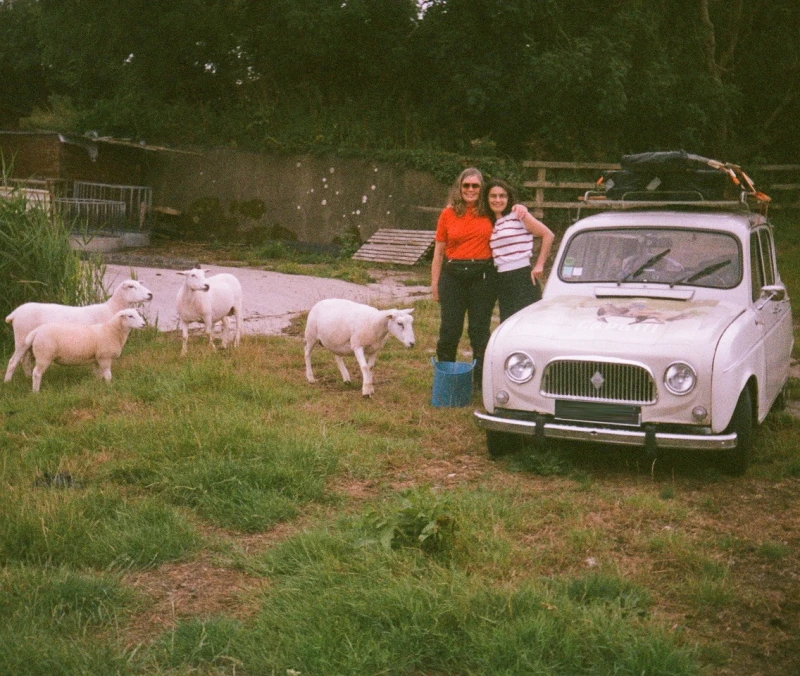
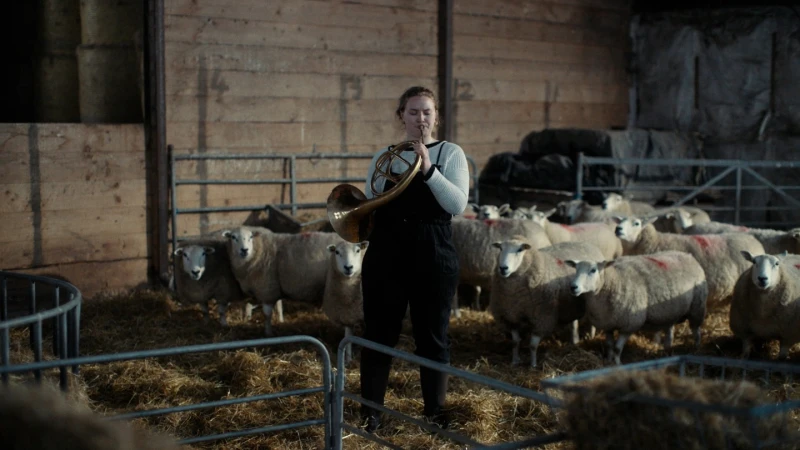
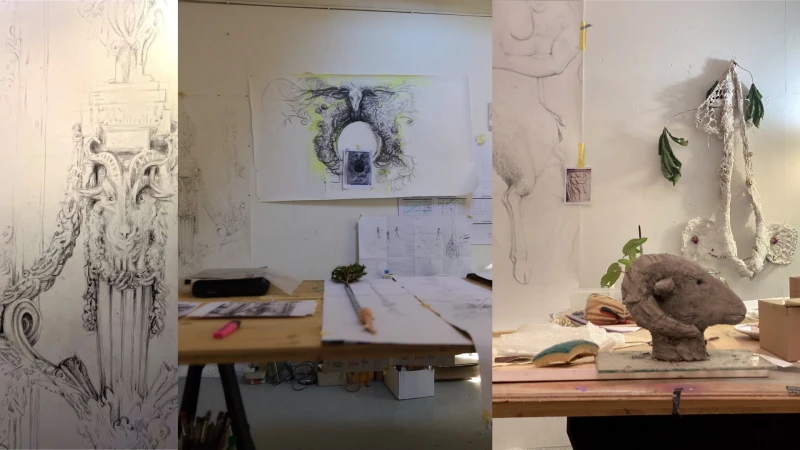
Orla Barry (b. 1969) is both an artist and a shepherd. After living in Brussels for 16 years, she decided to move to her father’s farm in rural Wexford where, alongside her artistic activity, she keeps a flock of pedigree Lleyn and Galway sheep. Her work spans performance, video, sound installation, and writing, exploring language’s materialityand the disconnection between rural life and contemporary culture. Barry addresses themes of farming, gender, and the natural world through an embodied approach research. She is inspired by methodologies akin to auto-ethnography and she aims for a physical understanding of language as a visual and sonic form.