THE COLLIE, THE CHEVIOT & THE CROUCHED SKELETON
ORLA BARRY
Each year, Rua Red commissions two major new bodies of work by Irish and international artists, developed in response to the people and place of Tallaght and South Dublin County. Artists are invited to spend a sustained period at Rua Red and within the county, undertaking research that is embedded, responsive and considered. This process often engages with issues that are very real and relevant to the people who live here.
As part of Rua Red’s commissioning model, artists are offered a residency studio for a dedicated period of research and development. This may unfold over one to two years in advance of an exhibition, allowing artists to become embedded within the organisation and its wider community. Rua Red is home to a rich network of creative organisations and individual artists. It is a place where ideas are born and evolve, supported through a wider ecology of skills, knowledge, relationships and resources. The residency provides artists with time, space and support to research, develop and produce new work.
In 2024, Rua Red Director/Curator Maolíosa Boyle invited Orla Barry to create a new work in response to the rural communities of South Dublin. Rua Red is situated at the foot of the Dublin Mountains, with the fields of Bohernabreena visible from the building. These landscapes form an important rural part of the county, yet sit in close proximity to the urban centre of Tallaght. From the mountains, the town planners’ imprint is clearly visible, as Tallaght appears pressed up against the hills.
Through this commission, Rua Red sought to open up new connections with the farming communities of the area, creating space for conversation, exchange and interaction within the gallery, its education programme and wider public context.
The research began by connecting Barry with farmers living and working in the nearby Glenasmole and Bohernabreena and Glencullen. As both an artist and a shepherd, she brought a particular sensitivity and lived understanding to these encounters. Conversation, shared experience and the tradition of walking the land became central to the development of the work, allowing the commission to emerge through acts of listening, observation and exchange.
DATES
10 JULY
—26 SEPTEMBER
2026
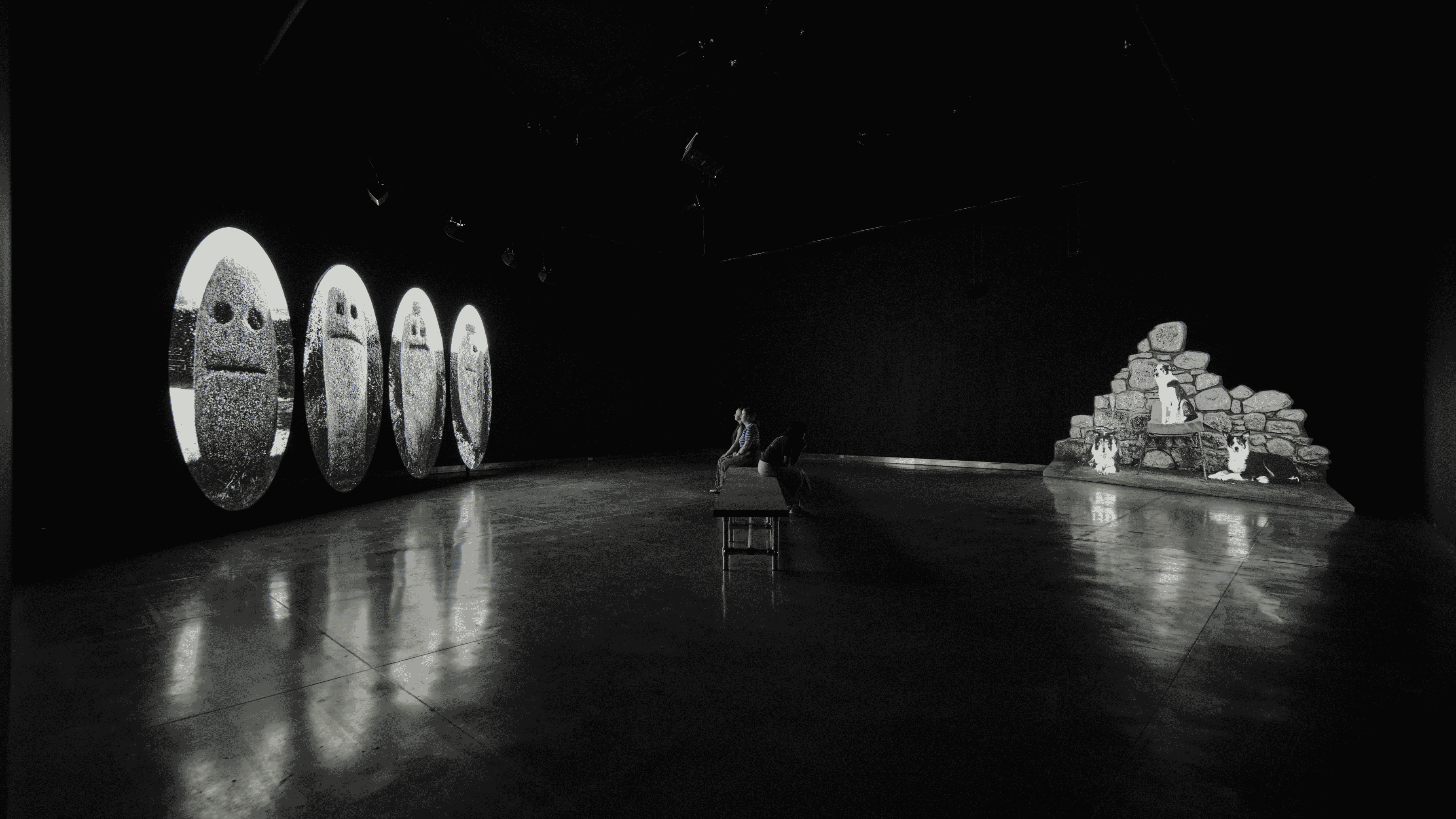
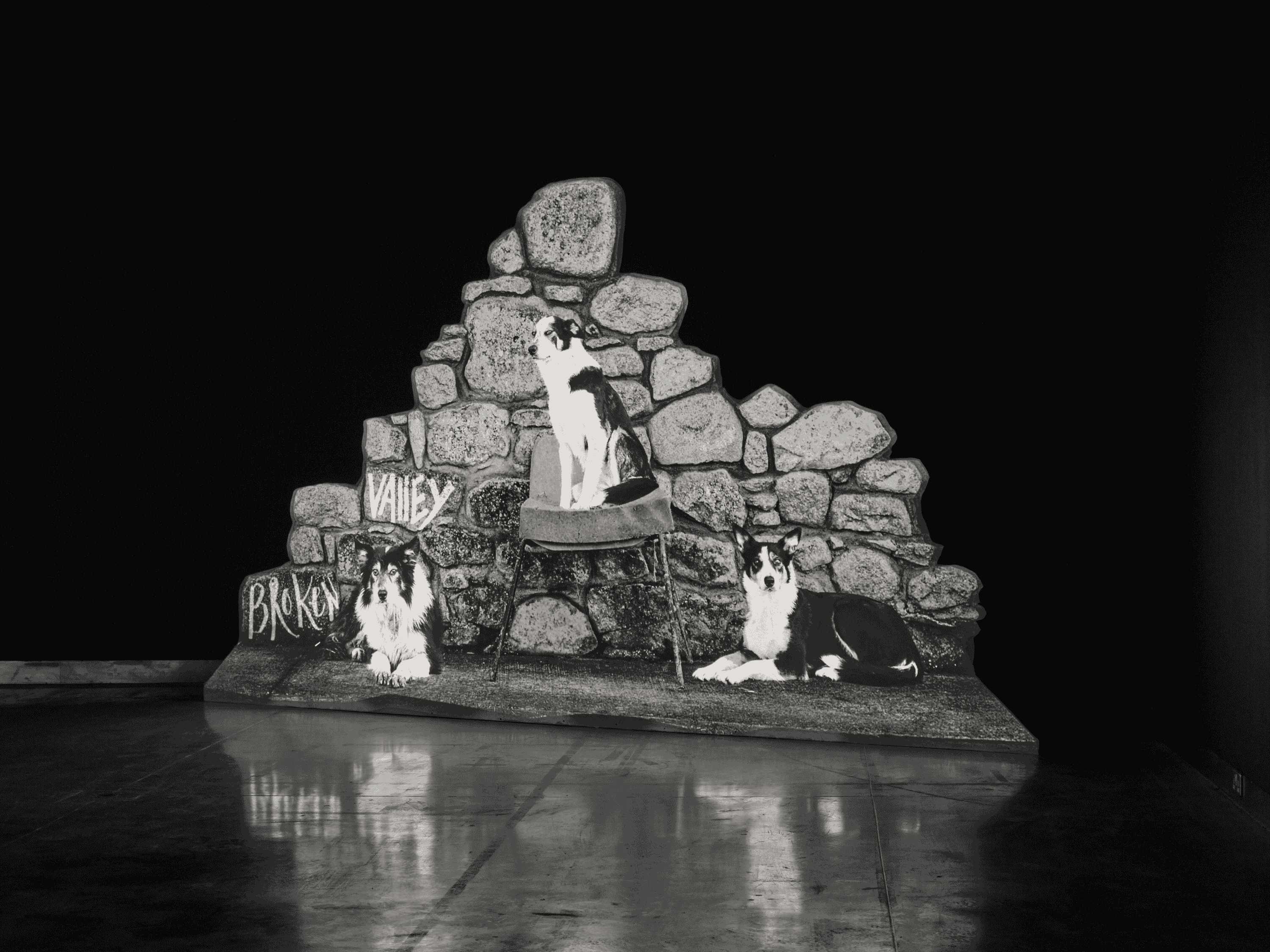
In The Collie, The Cheviot and The Crouched Skeleton, Barry uses the farm walk as both a method of research and a form of encounter. For many years, she was part of a sheep discussion group in Wexford that organised farm walks. Within farming communities, the farm walk is a collaborative practice in which a farmer opens their land to others for peer learning, shared experience and practical exchange. It is a context in which agricultural methods can be seen, touched, questioned and analysed in real time, and where successes and mistakes are discussed openly. These walks create a space for learning that is honest, situated and rooted in lived knowledge.
Reflecting on the process, Barry says:
“En route through the Dublin Mountains, I had no set agenda. One farmer introduced me to the next. I found myself taken to unexpected places, both physically and mentally, and became torn between my roles as artist, farmer, reporter and broadcaster. I wanted to understand, introspect and experience the story of the area through time spent walking and talking with other farmers, and to create work in a way that was humorous, and engaging.
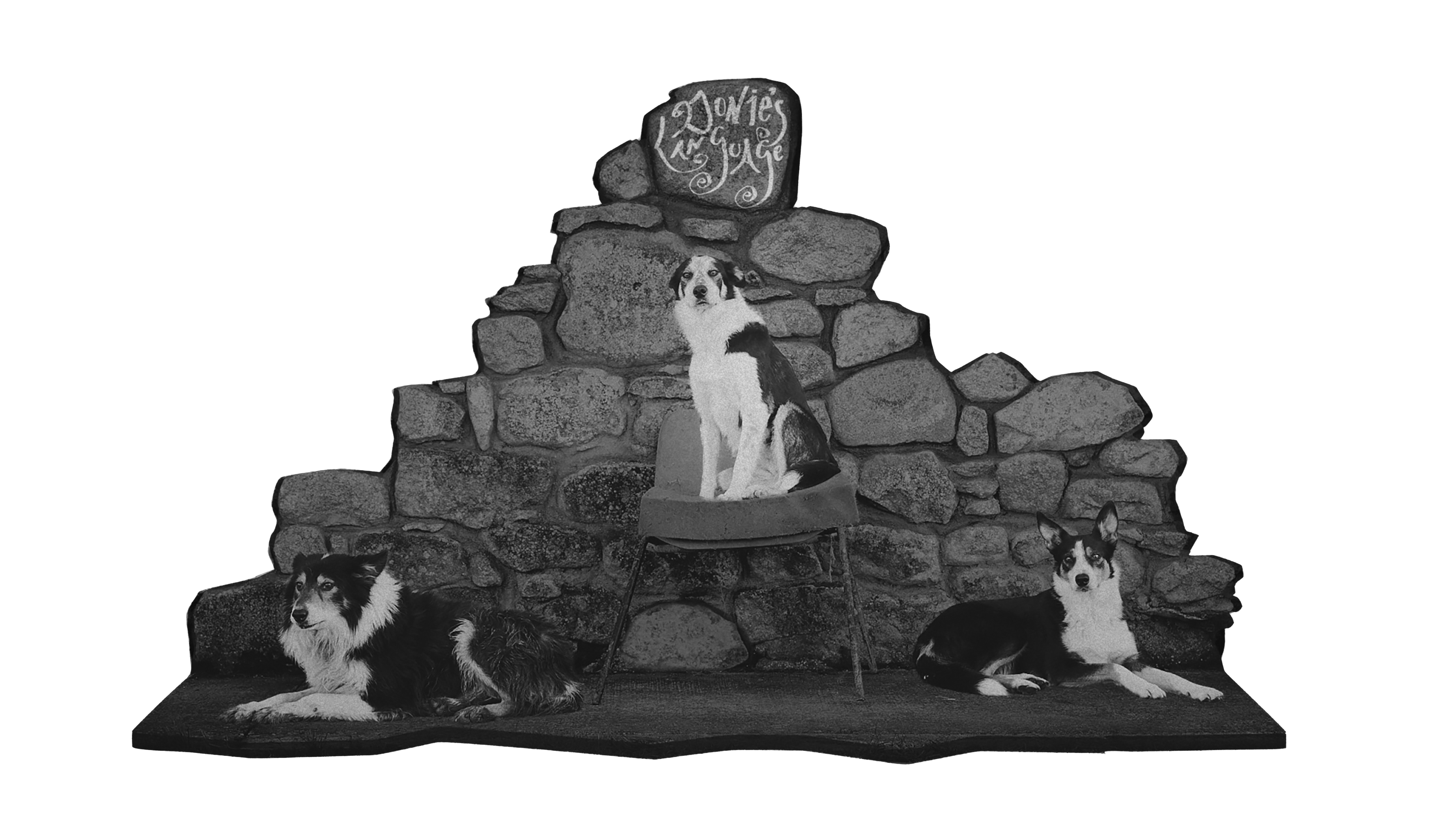
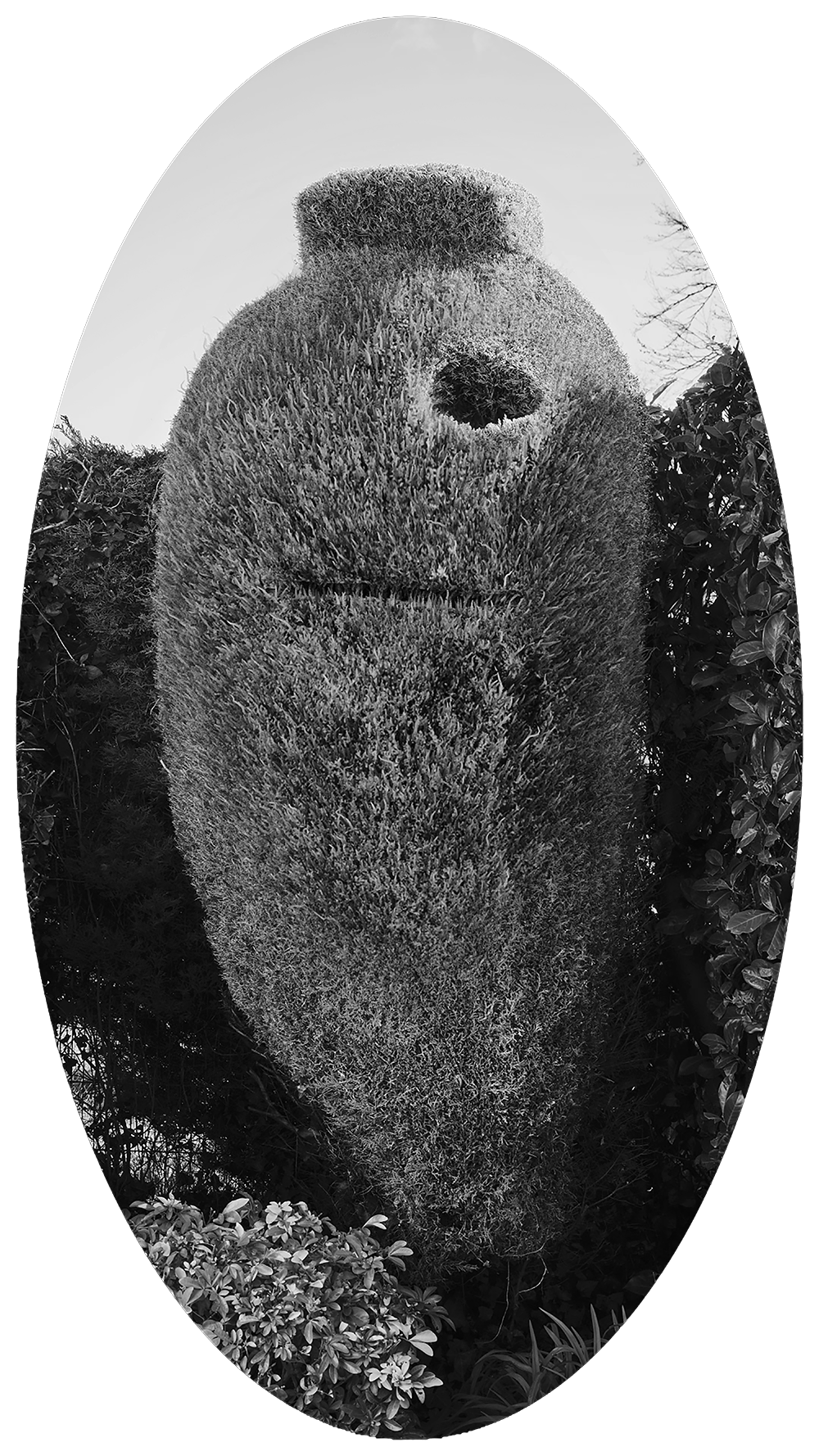
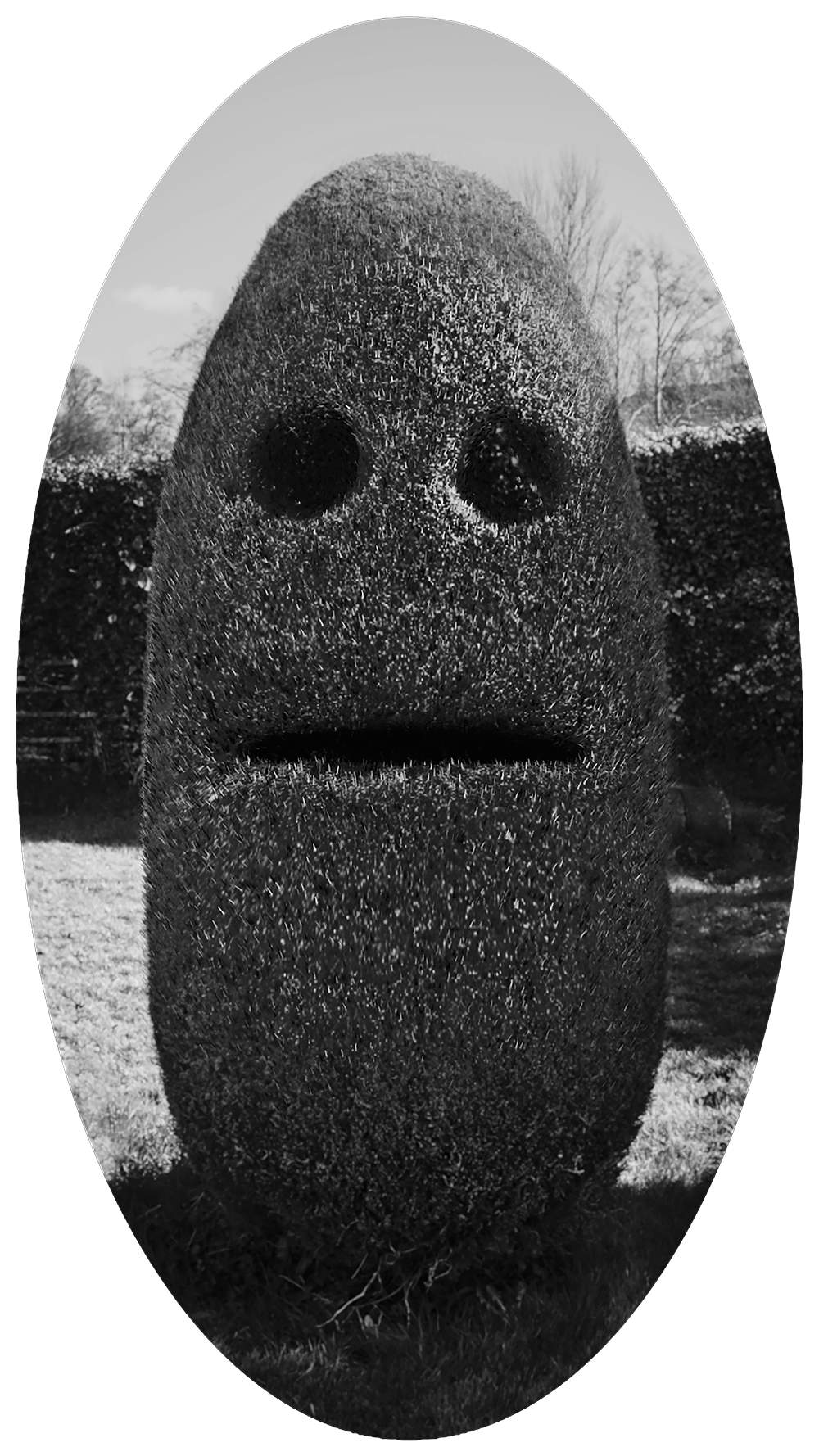
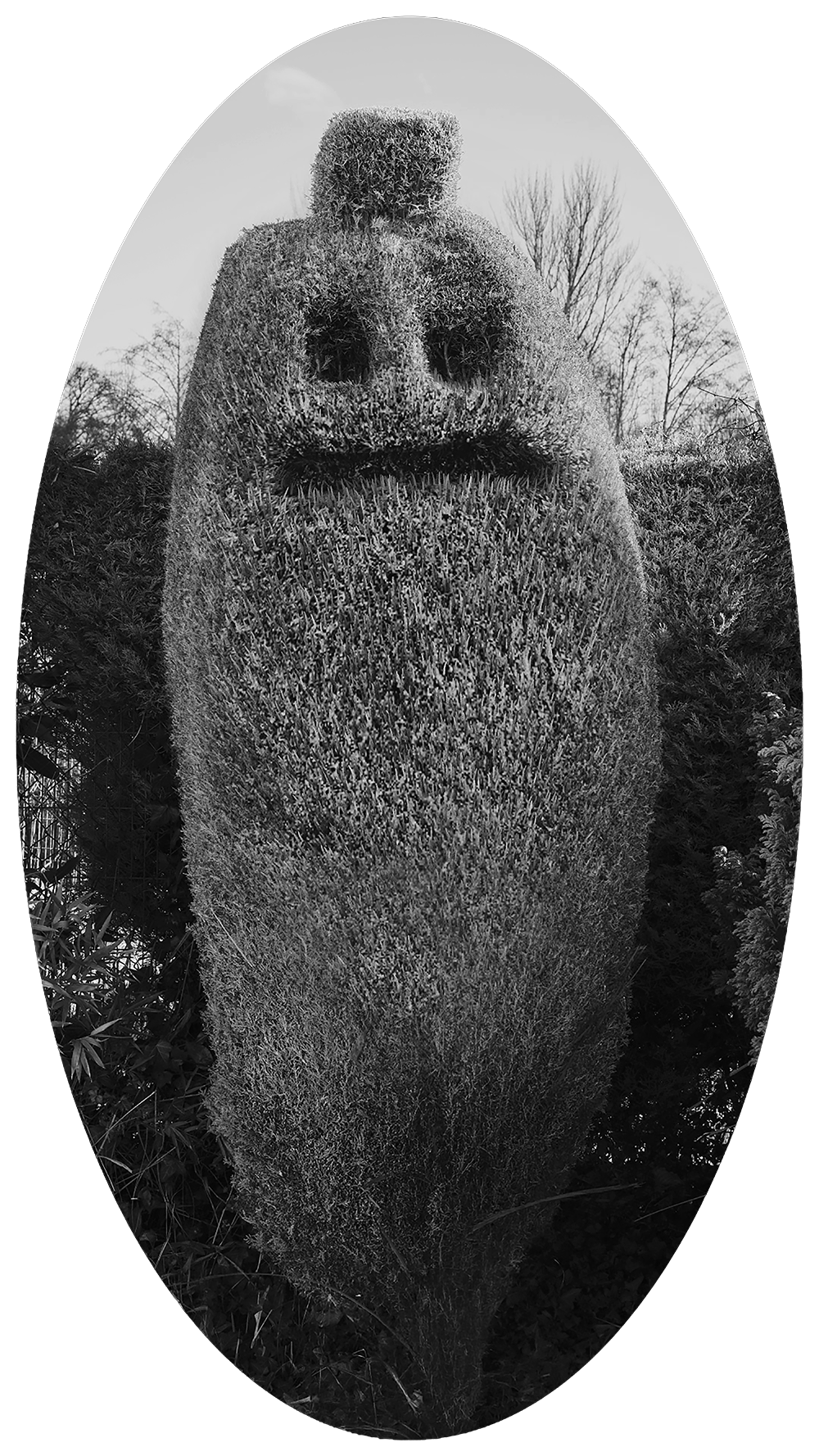
With the brand-new works Donie’s Language and Chaddy and the Leylandii Gods, I try to create a personal map, touching on the poetics of place and farm life. I’m using fable-telling as a form of retrieval, in which each evocation of memory alters its perception of the past. I touch on breeding and bloodlines, friendship, heritage, and the destructive nature of tourism in rural areas, as well as how the necessity to survive pushes farmers into other forms of work and also into the transformation of the landscape in which they live and work. Discovering the Dublin Mountains in this way felt a bit like Sir Walter Raleigh discovering potatoes in his own parish.”
With humour, respect and close attention to rural knowledge, The Collie, The Cheviot and The Crouched Skeleton considers the farm walk as a means of entering into relation with land, labour, memory and community. The commission reflects on the complexities of rural life at the edge of the city, exploring how landscape is shaped by inheritance, lineage, survival, friendship, economic pressure and the stories that pass between people.
The Collie, The Cheviot and The Crouched Skeleton launches at Rua Red on Friday 10 July at 6pm and continues until Saturday 26 September.
All welcome. Admission free.
About Orla Barry
Orla Barry (Ireland, 1969) is both an artist and a shepherd. After living in Brussels for 16 years, she decided to move to her father’s farm in rural Wexford where, alongside her artistic activity, she keeps a flock of pedigree Lleyn and Galway sheep. Her work spans performance, video, sound installation, and writing, exploring language’s materiality and the disconnection between rural life and contemporary culture. Barry addresses themes of farming, gender, and the natural world through an embodied approach research. She is inspired by methodologies akin to auto-ethnography and she aims for a physical understanding of language as a visual and sonic form.
Her work has recently been shown in international solo exhibitions including Beton Salon, Paris (2025), MAC’s, Grand Hornu (2024), Mu.Zee, Ostend (2019), Crawford Art Gallery, Cork (2017) Quetzal Art Centre, Vidigueira (2017), Wexford Arts Centre (2017), Temple Bar Gallery + Studios (2016), Mothers Tankstation (2014), Museu Bernardo in Lisbon (2011), Irish Museum of Modern Art (2006), Camden Arts Centre in London (2005), W139 in Amsterdam (2005), S.M.A.K Ghent (2005), Argos (2002). Her live performances have been presented as part of Dublin Theatre Festival (2023/2016), Cork Midsummer Festival (2023/2017), WoWmen Festival KAAI (2020), Playground & M-Museum, Leuven (2008, 2012, 2019) Performatik 17: The Brussels Biennial of Performance Art (2017), The South London Gallery (2013), Bozar, Brussels (2013), de Appel, Amsterdam (2009) and UBS Openings: Saturday Live, Tate Modern (2008). Recent group shows include Memory of a free festival, Ormston House, Limerick, 10th Biennial of Painting, Roger Ravel Museum, Machelen-aan-deLeie (BE) and 39th & 40th EVA international
Exhibition Credits
- Concept & Creation
Orla Barry - Animation
Thomas De Brabanter - Sound
Mark Connaughton - Voices
Orla Barry, Timmy Creed, Niamh McCann, Aria Shahghasemi - Orla Barry would like to thank:
Donie Anderson, Peter Bergel, Breda Brown, Colin Graham, Selina Guinness,Padraig Lambert, Tim McGlynn & Dublin Hill Goats cheese, Philip McGuire, Des O’Carroll, Mary O’Rourke.